In May 1922, Pancho Villa arrived in the United States from the Philippines and won his first overseas fight against Abe Goldstein in Jersey City on June 7, 1922. Following a series of quick successes that year, he caught the attention of boxing enthusiasts and was scheduled to fight American Flyweight Champion Johnny Buff in September. The fight drew the attendance of Jersey City’s mayor, FrankHague, as Buff was a local favorite.
As Villa’s reputation grew, he set his sights on the vacant World Flyweight Championship, which was to be contested in the U.S. He went on to defeat Welsh-born boxer and former World Flyweight Champion Jimmy Wilde.
After World War I, American soldiers were stationed in the Philippines, including Mike Ballerino, a private from New Jersey. At the time, boxing in the Philippines was still in its early stages. Ironically, Villa and Ballerino fought multiple times in matches that lasted 20 rounds. Ballerino later became a Middleweight champion, while Villa remained the Flyweight champion. The two would never meet again in New Jersey.
The 1920s also saw the arrival of Filipino seafarers via the Atlantic Ocean, ferrying immigrants to Ellis Island. Among them were organizers of the Knights of Rizal, Inc., a Filipino organization distinct from the Knights of Rizal in Manila.
Pictured
(seated left to right) Anastacio Q Liaguna, Eduardo H Reyes, Mamerto M Buenafe, Mrs Thedora Abaya (Mother Advisor), Miss Louise Ruth Shapiro (Legal counsel), Eduardo Orna,Albert C Young, Julian Tabletan,
(second row) Honofre G Javier, Higino G Navar, Jose R Asuncion, Vicente N Bellaran, Afredo M Alvarez, Eulogio D Jutie, Ê
(third row) Miguel V Macabay, Alfonso C Barredo, Estanislao T Bantog, Jose P Cabansag and Esteban Macaso
Vicente Bellaran, Julian Tabletan, Eduardo Orna, Alfonso C Barredo, Higino Navar, Alfredo Alvarez, and Astanaslas (Estanislao) Bantog are listed on the Ellis Island Data Center.
Astanaslas (Estanislao) Bantog was born in Calumpit, Philippines, on May 7, 1892. He arrived in the United States on June 11, 1917, standing 5’7″ and weighing 159 lbs. Later, he changed his name to Stanley. He worked as a wiper/fireman and traveled aboard the ship St. Paul with Santiago Dela Coucha (born July 25, 1885, in Subic). Both were listed as crewmembers in the Ellis Island Historical Family records, ferrying immigrants to Ellis Island during the early 1900s.
Other crew members included individuals with last names like Asuncion, Jutie, and Abaya, who may have been related to one another. These names appeared multiple times across separate voyage manifests. Some members of the Knights of Rizal were also likely mariners, though assigned to ships that did not transport passengers to Ellis Island. Unlike early Filipino pioneers in Hawaii and the West Coast—who primarily worked as contract laborers on farms (sacadas), in Alaskan salmon canneries (Alaskeros), or as pensionados (government-sponsored scholars)—Filipino sailors were among the first to settle on the East Coast. The Filipino community there remained small due to the great distance between the Philippines and the Eastern Seaboard. However, the completion of the Panama Canal allowed for more direct passage, eliminating the need to travel via Europe or around the Strait of Magellan.
Between 1892 and 1924, over 22 million passengers and ship crewmembers were processed through Ellis Island and the Port of New York (ref: American Family Immigration Center). Many Filipino mariners were among them, playing a role in transporting millions of new immigrants. By the final years of this period, Filipino-Americans made up nearly 20 percent of ship crews.
On February 25, 1889, Rizal’s friend, Graciano López Jaena, wrote in La Solidaridad (a Filipino propaganda newspaper in Europe) about the presence of Filipino sailors in Barcelona. He also noted that Filipino seamen could be found in nearly all major ports of England, France, and the United States, including New York and Philadelphia. Official immigration records listed their ethnic classification as either “Filipino” or “Philipino.” Some Filipino immigrants first settled in Europe before relocating to the East Coast via Ellis Island.
At that time, ocean liners unloaded first-class passengers directly in New York City, while other passengers were sent to Ellis Island for immigration processing. Those who gained entry through the portal of Jersey City (now Liberty State Park) continued their journey into America.
The immigration system changes in the 1970s generated the coming of more professionals in Jersey City. Accountants, Engineers, and others, other than medical practitioners, landed in downtown Jersey, an easy commute to New York. They found positions in City Hall and had a chance to participate in politics. Linda Mayo became a Deputy Mayor, Serafina Sengco became Chief Financial Officer, and others became leaders in the Finance and Accounting departments. Rolando Lavarro tried the mayor’s post but came short. In real estate, the landscape quickly went to Greg Racelis.
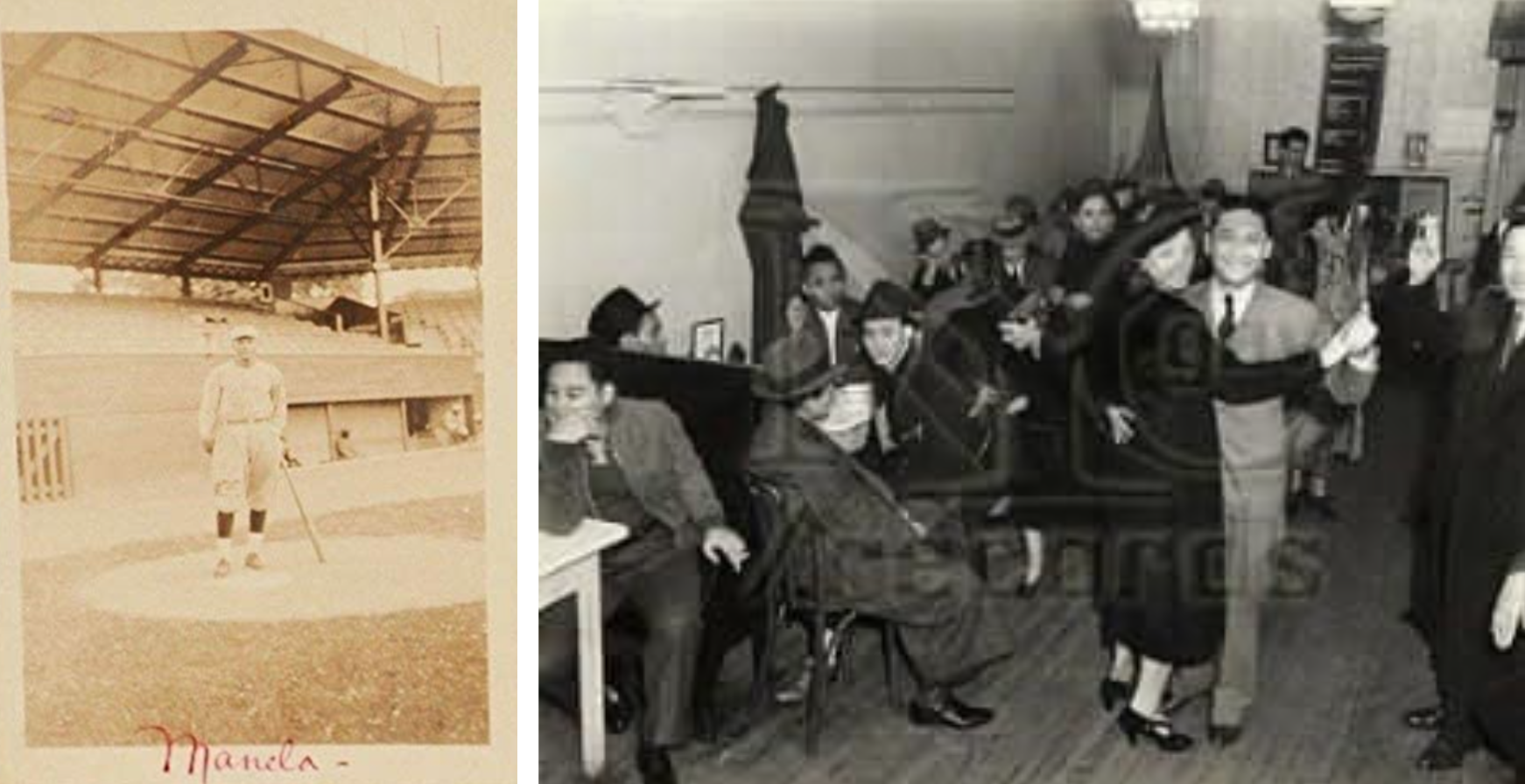
Claudio Manela was the first minor league baseball player from the Philippines. He was working on a Filipino steamship when he left to settle as a musician in New York. He signed with the Cincinnati Cuban Stars in 1921, going 4-10 with a 4.00 ERA. Technically, he was the first Filipino in the Negro Leagues. In 2020, MLB took the step to recognize 100+ year old Negro League stats retroactively to acknowlege the contribution of Black Americans to the great American pastime.
The WPA, a federal government agency, allows free use of their photos, at least for noncommercial use. This is a rare photo for Filipino American history as the first Filipino American residence and restaurant in New York. Claudio lived here for years, and I like to imagine that Claudio is the Filipino dancing in this photo.
Let’s look at over 100 years ago, during the days of our Manong. He filled out a World War II draft card, with a birthdate of April 12, 1893, showing him living in Newark, New Jersey. He appears several times as a crew member on ship manifests from 1946 to 1948. Claudio Manela played baseball before the great Jackie Robinson broke the color line and became the first African American to play in Major League Baseball for the Brooklyn Dodgers on April 15, 1947.
Both Robinson and Manela played on the same team in Jersey City at Roosevelt Stadium around 1921. Claudio started baseball in the semi-pro colored league even before the great pitcher Satchel Paige. He also appears in the Social Security Death Index, still residing at the time of his death in November 1975 in Newark.
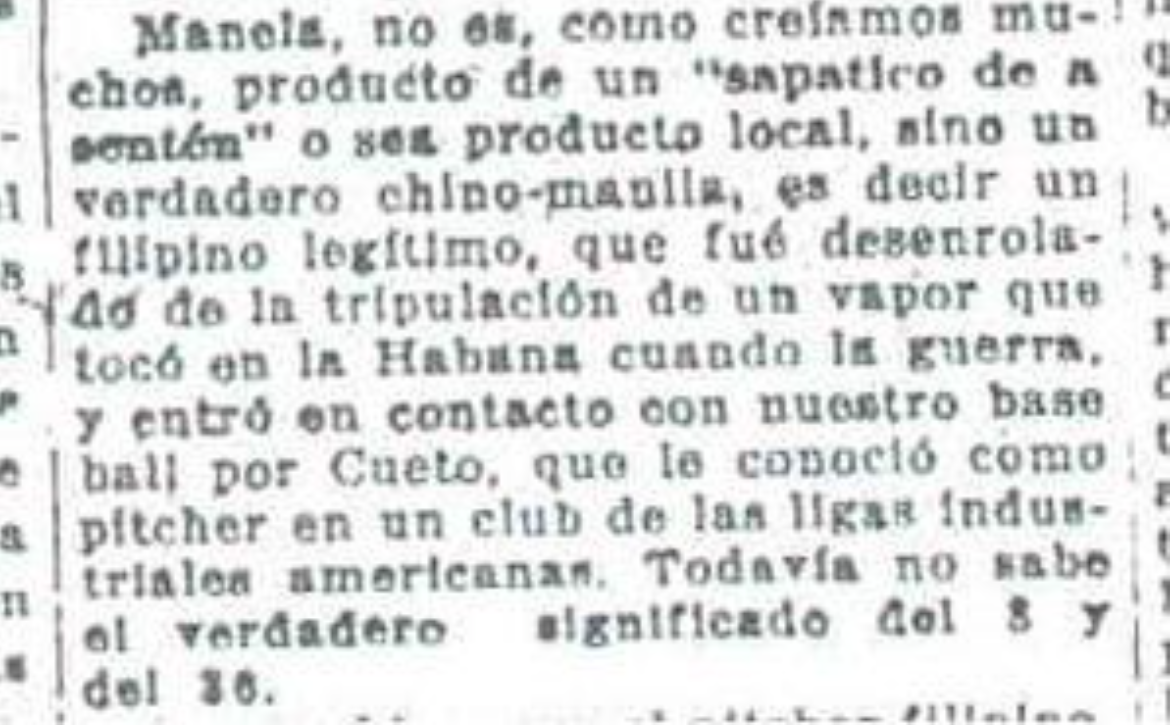
The 1921 Cincinnati Cuban Stars had Claudio Manela in 1921-22, a Filipino lefty who lived in Brooklyn in the late 1910s and early 1920s. This is the headline from Diario de la Marina that confirmed it (October 27, 1921).
“Manela is not, as we had thought, a product of a ‘sapatico de asentén’ [?] or a local product, but is instead a true ‘Chino-Manila’, that is to say, a legitimate Filipino, who left the crew of a steamship that called at Havana during the war, and was brought into contact with our baseball by Cueto, who had known him as a pitcher for a club in the American industrial leagues.”
…Claudio Manela thus joins a rather select company of professional Filipino ballplayers to have come to the United States; to my knowledge, Manela was, I think, the only Filipino to play in the Negro Leagues.“
It turns out that there was a dispute over the drafting rights to Manela between Hartford and Jersey City of the International League. The Hartford Senators were assured the services of the swarthy heaver when he was notified by Secretary Farrell that Jersey City disputed the property of the pitcher, who ruled the Cuban belonged to the Senators. (Courant 3/29/1922)
Lou Gehrig signed a contract with the Yankees on April 30. Gehrig returned to the minor-league Hartford Senators to play parts of two seasons, 1923 and 1924, the same year when Claudio, Gehrig joined the Yankee major team, indeed, the luckiest man alive.
Manela’s grave can be found at the Bloomfield Cemetery NJ. 75 years later, Bobby Chouinard became the second Filipino baseball player. Chouinard was listed as the first until the Negro Leagues were given major league status in 2020. He was briefly with the Hartford Senators in 1922. In 1925, he allowed nine hits and nine runs (five earned) in 4 2/3 IP for the Cuban Stars.
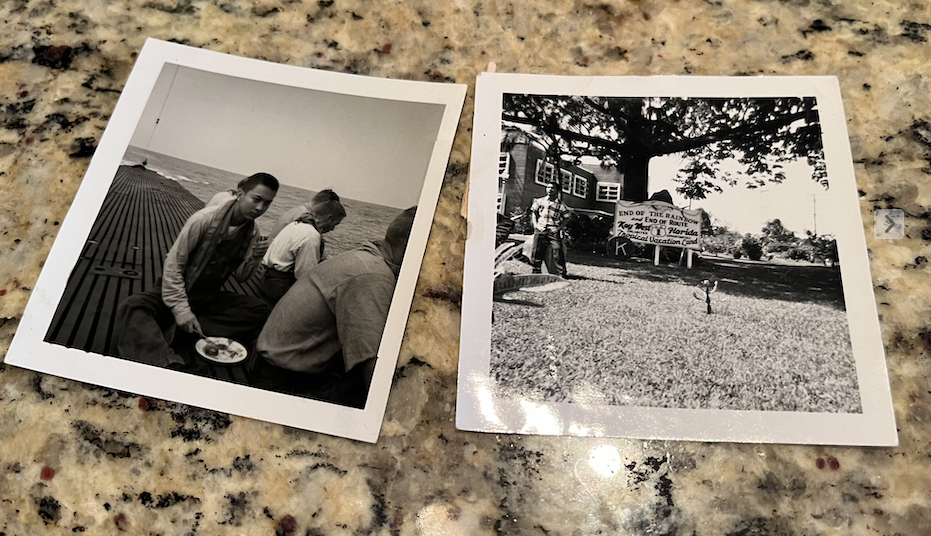
I recently watched Amazon’s remake of the 1980s movie “Roadhouse,” and it instantly brought back memories of my early submarine life. Unlike the original, the new movie is set in the Florida Keys, where I was first stationed as a young sailor. Within 4 years, I crossed paths with astronaut John Glenn, President John F. Kennedy, and the boxer Muhammad Ali.
As I wasn’t yet of drinking age, I didn’t get to share a Cuba Libre with Hemingway at his regular Key West drinking hole, the Brown Derby Saloon. The bar in Roadhouse, however, was a steel cage of sorts, home to lots of manly brawls. My steel cage at the time was a claustrophobic diesel submarine, where I was a crew member.
In the era of transition to Nuclear power, in 1958 the USS Nautilus went under the North Pole the year I joined the US Navy. Harnessing the power of nuclear reactors to produce unlimited energy, as opposed to putting wild gladiators inside a steel cage and fighting to the end. It started when the power of the wind was harvested.
I once was in a Charleston shipyard, stopping to charge the submarine’s battery. There I saw Roman Gabriel featured in an issue of Sports Illustrated, who was playing football for NC State. Following sports was a way to assimilate into American life. From there, we sailed to Europe for three months. We got to see the 1960 Olympics in Rome and watched Muhammad Ali.
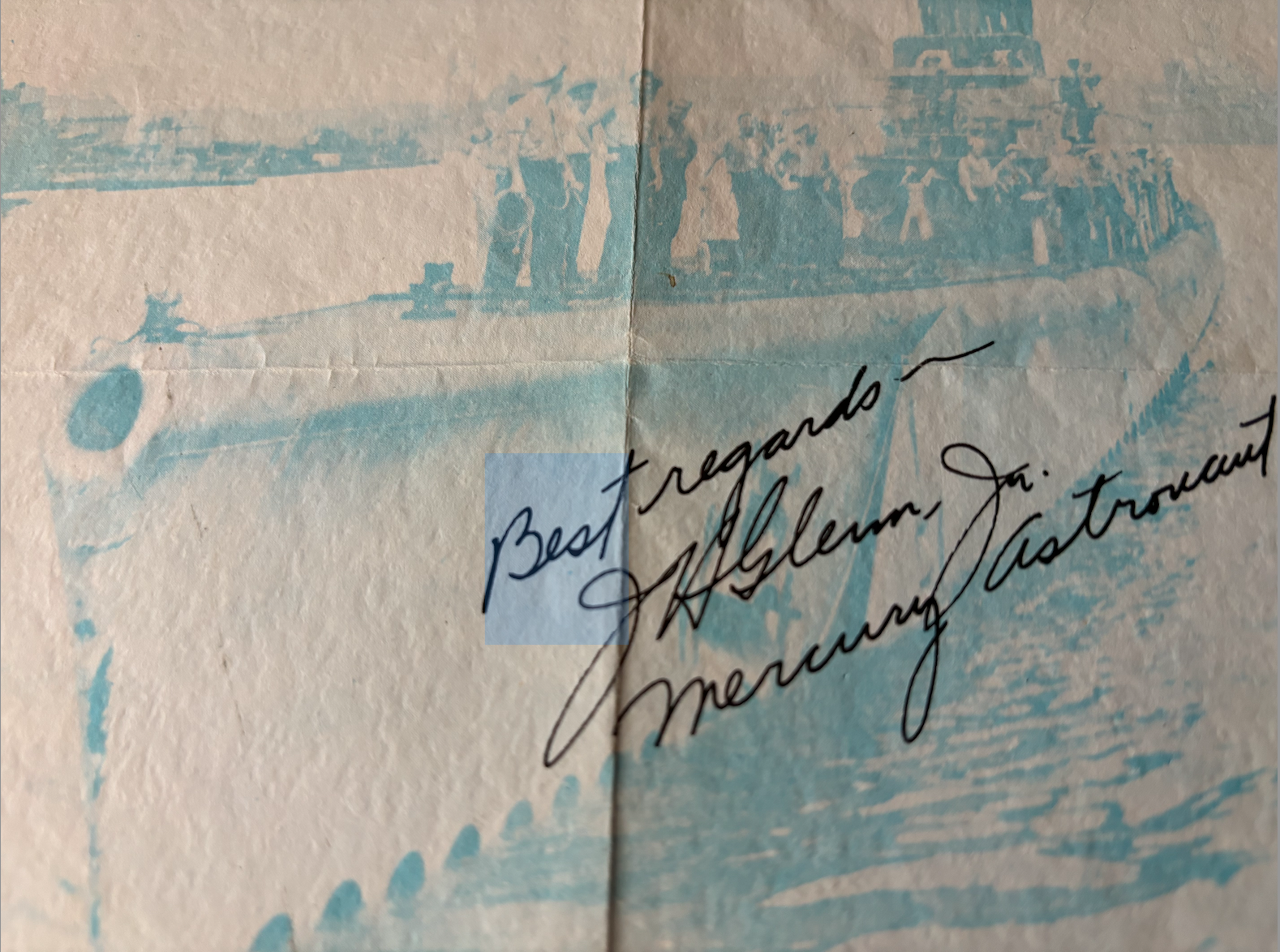
My limited Spanish translation skills helped a few asylum seekers who were pulled onboard trying to escape the crisis in Cuba. We visited Gitmo 4 times in those years. In 1961, we met up with John Glenn who was in medical isolation after a preparatory voyage for their moon landing. We also met up with JFK, in that infamous October of 1962, as Key West was the ground zero for the Cuban Missile Crisis.
My last tour was at Charleston Submarine Base, assigned to Fleet Ballistic Missile. Simply put capable of mass destruction. My lowly office and sleeping quarters were sandwiched by a nuclear reactor and 16 ballistic missiles armed with warheads. It was my version of sleeping with the devil. Our world was lucky we never fired in anger, a true deterrent of peace. The photo of me is undersea, believe it or not near Disney World. I brought my family here for the last reminiscent six years later.
The one-liner “Nobody wins in a fight” is an important lesson. The Greyhound station is a fixture in the movie as well, reminding me of my last day in the Keys, where I boarded a bus to start a journey back to the West Coast. Needless to say, I never became “Ernestor” Hemingway, my wild fantasy. I’m just the Old Man in the Sea, as Ernesto would say with humility. I was just a passenger among the crazy bunch of men. I am proud but no hero.
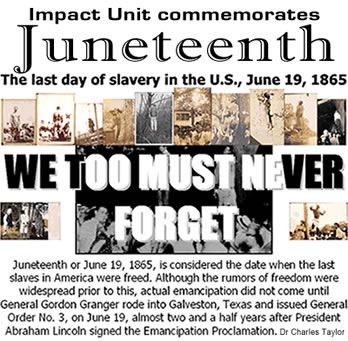
Juneteenth is now a Federal Holiday this year. Juneteenth is a celebration of black history and freedom, a holiday relatively few Americans had heard of until recently, if at all.
Suddenly, Juneteenth is prominent on the nation’s calendar, propelled by wide protests against racial injustice. The holiday gets its name from June 19, 1865. That’s the day the Union army arrived in Galveston, Texas, to announce that all African-American slaves in the state were free under President Abraham Lincoln’s Emancipation Proclamation. The state was the last in the Confederacy to receive word that the Civil War was over and that slavery had been abolished and the last where the federal Army established its authority.
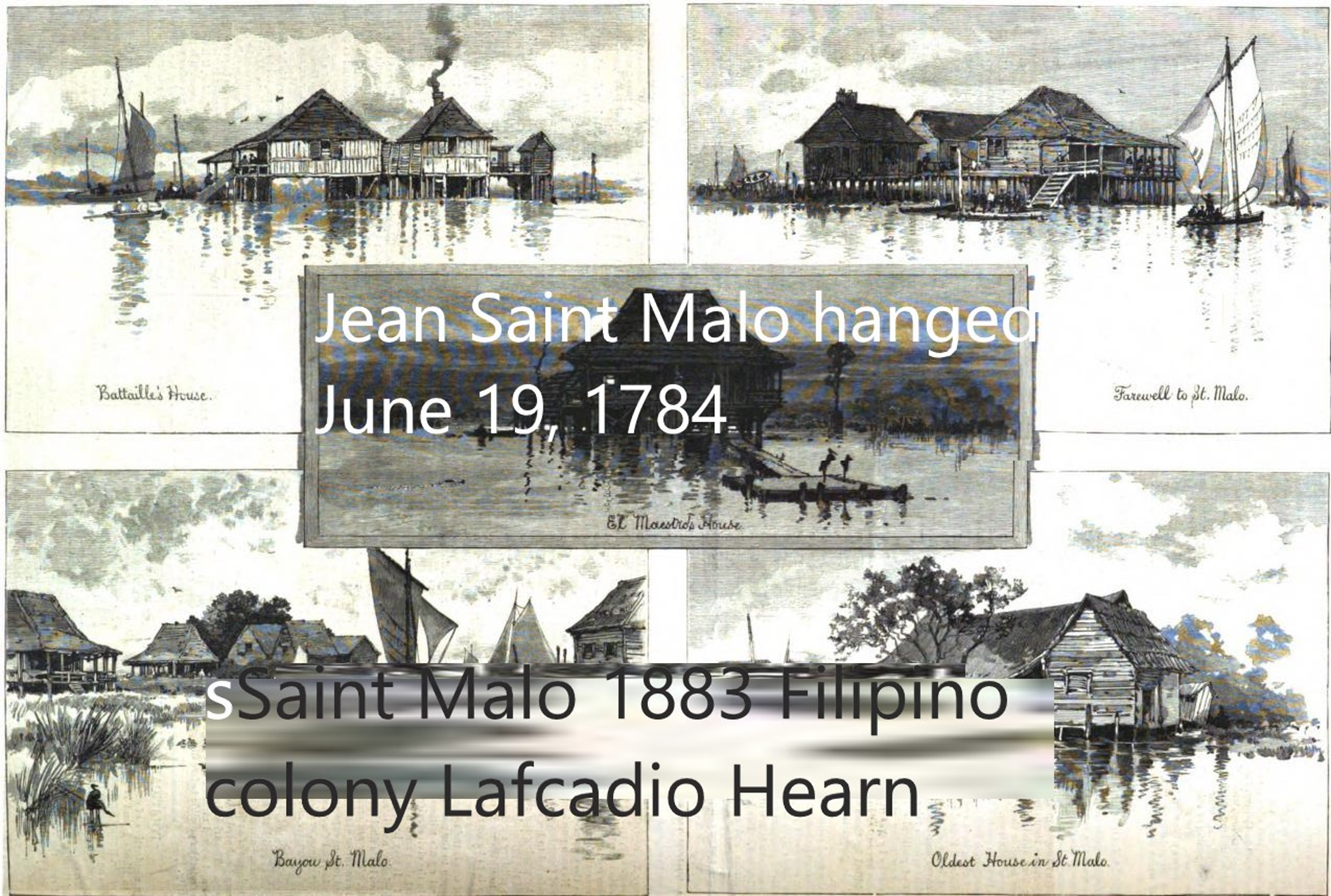
My comparative weaving timeline is farfetched perhaps, but that’s the way I see and write. A Filipino settlement in Saint-Malo in the early 1800s is documented by Lafcadio Hearn’s article in Harper’s Weekly. I bought all the surviving issues that I could find. Hearn was described as a macabre writer, and I will add that he, too, fought against early discrimination and inequality.
In the early 1780s, Jean (also known as Juan and his colony of runaway African slaves) invaded the dense swamps east of the city and across Lake Borgne. They obtained weapons from free blacks and fought for their freedom. Jean thrust an ax into a tree and declared, “Woe to the White who would pass this boundary.” The rebels escaped to Saint-Malo Bayou. The Spanish colonial authorities led a campaign to suppress slave revolts, capturing what will be known as Juan Saint-Malo and his 60 followers. He was condemned to death by hanging, on the charges of murder. The execution was carried out by the alcalde Mario de Reggio on June 19, 1784, in front of St. Louis Cathedral at the present-day Jackson Square in New Orleans. I always assumed that our Saint Malo was named for the France region during the French reign in the Mississippi River. New Orleans had another legendary Jean of Saint-Malo during the Jackson era of the War of Independence. Half pirate and trader, Jean Lafitte is rumored to be from Saint-Malo.
The greatest French explorer is Jacques Cartier born in 1491 in Saint-Malo, the port on the north-east coast of Brittany. Commissioned to “discover certain islands and lands where it is said that a great quantity of gold and other precious things are to be found”. But instead, he claimed Canada for the French king. One of the expeditions took off from Saint-Malo and a Canadian place got its name Saint-Malo. Failing to find the westward passage to the Orient, the explorers followed the great Mississippi ending to the Bayou du Saint-Malo.
On June 19, 1861, Dr. Jose Rizal was born in the Philippines and the beginning of the US Civil War. The Filipinos were mostly seafarers when they participated in the conflict. A few even served on the newest warships at the time, the Ironclads and the Union ship Monitor. Combined with its rotating turret, the world got a naval revolution in construction.
The Union victory brought us Juneteenth of June 19, 1865, but was never as prominent as the expected 2020 celebration as it gets a new meaning.
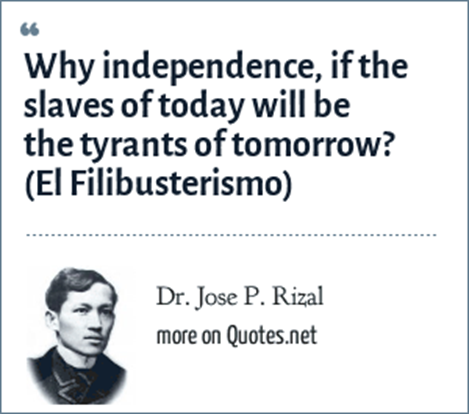
June 19, 2020, was Rizal’s 159th birthday celebration as we are still learning his words. Why independence? Of the slaves of today will be the tyrants of tomorrow. Interestingly even the US Navy named a warship USS Rizal in the 1920s. Maybe I could have found the meaning of Saint-Malo by having a sumptuous feast at Saint Malo restaurant in the nation’s capital, ordering from their fusion menu. The restaurant however is gone, a casualty of Covid19. It is not Saint Malo the bad saint as there was never one but my halo-halo Filipino American history continues.
I spent more time in Charleston than under the Atlantic Ocean, so this observation is more than a limited periscope view. This historic town is well preserved, classic as Gone With the Wind. Fort Sumter faces the Battery Park, but in the heart is the Market Place, where the only surviving building is about human exchange.
Now a museum, it is the slave auction gallery where the black slaves were auctioned fresh from the port more than hundred years ago. It is estimated that over a third of African slaves came through the port of Charleston.
The main street is King Street, where the City Library provided good reading; mostly the sports pages about Roman Gabriel. The street parallels Meeting street and both run to North, toward the Charleston Navy Shipyard. I drove down it many times, crossing the railroad track, near Calhoun Street where the racist Dylann Rowe shot the church goers. The rail crosses King and Meeting street. The great divide, the proverbial saying “born in the wrong side of the tracks.” North of the line was the dodgy slum were the black community lived. Farther north, the Navy Liberty town, Reynold street, drunk sailors would strolled every night from bars and taverns catering to the Navy Main gate. I was there when racial segregation manifested into the anti-miscegenation laws. Filipino sailors could not marry whites, or even shack up with one. Live together in a trailer and you will get a visit from the vice squad. I found it interesting that some Filipinos would go to North Carolina to marry their white girls, since they had different anti-miscegenation law for Filipinos after WWII. It might be the loophole that the father of Roman Gabriel found. He married an Irish girl and settled in Wilmington, NC where Roman grew up and became All-American.
The H.L. Hunley was a Confederate submarine that played a minor role in the US Civil War, but she demonstrated the advantages and the dangers of undersea warfare. She was sunk in Charleston harbor where she remains. After I left the submarine force, Hunley was salvaged. It is now on display on the north of Charleston not as Confederate triumph, but She was the first combat to sink a warship that change naval warfare. As segregation law changes, for some the culture might remain. I was surprised when I met an African American. When he told me that he graduated from Citadel, I immediately asked if he was the first black cadet. The Lilly-white military school in Charleston was the West Point of the South. I remember the Cadets; they were all white; I hate it most for they had the great advantage in pursuing the southern lass 😉
Charleston is city of Rivers, it fuels the economy around it. Southern politics learned after reconstruction to send the same representative to bring home porky bacon. Mindel Rivers became one of the most powerful men in Washington. He was re-elected multiple times, eventually gaining the chairman of the Armed Forces appropriation. Nuclear submarine flotilla turned the city into a military-industrial complex. The Southern Democrat Party that once controlled the house now had their fortunes reversed. Mindel Rivers had the makings of the perpetual drunken sailor, friend of the military, but an ardent segregationist of his time.




 Filipinohome.com