Claudio Manela in Jersey City

In May 1922, Pancho Villa arrived in the United States from the Philippines and won his first overseas fight against Abe Goldstein in Jersey City on June 7, 1922. Following a series of quick successes that year, he caught the attention of boxing enthusiasts and was scheduled to fight American Flyweight Champion Johnny Buff in September. The fight drew the attendance of Jersey City’s mayor, FrankHague, as Buff was a local favorite.

As Villa’s reputation grew, he set his sights on the vacant World Flyweight Championship, which was to be contested in the U.S. He went on to defeat Welsh-born boxer and former World Flyweight Champion Jimmy Wilde.

After World War I, American soldiers were stationed in the Philippines, including Mike Ballerino, a private from New Jersey. At the time, boxing in the Philippines was still in its early stages. Ironically, Villa and Ballerino fought multiple times in matches that lasted 20 rounds. Ballerino later became a Middleweight champion, while Villa remained the Flyweight champion. The two would never meet again in New Jersey.

The 1920s also saw the arrival of Filipino seafarers via the Atlantic Ocean, ferrying immigrants to Ellis Island. Among them were organizers of the Knights of Rizal, Inc., a Filipino organization distinct from the Knights of Rizal in Manila.

Pictured 

  • (seated left to right) Anastacio Q Liaguna, Eduardo H Reyes, Mamerto M Buenafe, Mrs Thedora Abaya (Mother Advisor), Miss Louise Ruth Shapiro (Legal counsel), Eduardo Orna,Albert C Young, Julian Tabletan, 
  • (second row) Honofre G Javier, Higino G Navar, Jose R Asuncion, Vicente N Bellaran, Afredo M Alvarez, Eulogio D Jutie, Ê 
  • (third row) Miguel V Macabay, Alfonso C Barredo, Estanislao T Bantog, Jose P Cabansag and Esteban Macaso 

Vicente Bellaran, Julian Tabletan, Eduardo Orna, Alfonso C Barredo, Higino Navar, Alfredo Alvarez, and Astanaslas (Estanislao) Bantog are listed on the Ellis Island Data Center.

Astanaslas (Estanislao) Bantog was born in Calumpit, Philippines, on May 7, 1892. He arrived in the United States on June 11, 1917, standing 5’7″ and weighing 159 lbs. Later, he changed his name to Stanley. He worked as a wiper/fireman and traveled aboard the ship St. Paul with Santiago Dela Coucha (born July 25, 1885, in Subic). Both were listed as crewmembers in the Ellis Island Historical Family records, ferrying immigrants to Ellis Island during the early 1900s.

Other crew members included individuals with last names like Asuncion, Jutie, and Abaya, who may have been related to one another. These names appeared multiple times across separate voyage manifests. Some members of the Knights of Rizal were also likely mariners, though assigned to ships that did not transport passengers to Ellis Island. Unlike early Filipino pioneers in Hawaii and the West Coast—who primarily worked as contract laborers on farms (sacadas), in Alaskan salmon canneries (Alaskeros), or as pensionados (government-sponsored scholars)—Filipino sailors were among the first to settle on the East Coast. The Filipino community there remained small due to the great distance between the Philippines and the Eastern Seaboard. However, the completion of the Panama Canal allowed for more direct passage, eliminating the need to travel via Europe or around the Strait of Magellan.

Between 1892 and 1924, over 22 million passengers and ship crewmembers were processed through Ellis Island and the Port of New York (ref: American Family Immigration Center). Many Filipino mariners were among them, playing a role in transporting millions of new immigrants. By the final years of this period, Filipino-Americans made up nearly 20 percent of ship crews.

On February 25, 1889, Rizal’s friend, Graciano López Jaena, wrote in La Solidaridad (a Filipino propaganda newspaper in Europe) about the presence of Filipino sailors in Barcelona. He also noted that Filipino seamen could be found in nearly all major ports of England, France, and the United States, including New York and Philadelphia. Official immigration records listed their ethnic classification as either “Filipino” or “Philipino.” Some Filipino immigrants first settled in Europe before relocating to the East Coast via Ellis Island.

At that time, ocean liners unloaded first-class passengers directly in New York City, while other passengers were sent to Ellis Island for immigration processing. Those who gained entry through the portal of Jersey City (now Liberty State Park) continued their journey into America. 

The immigration system changes in the 1970s generated the coming of more professionals in Jersey City. Accountants, Engineers, and others, other than medical practitioners, landed in downtown Jersey, an easy commute to New York. They found positions in City Hall and had a chance to participate in politics. Linda Mayo became a Deputy Mayor, Serafina Sengco became Chief Financial Officer, and others became leaders in the Finance and Accounting departments. Rolando Lavarro tried the mayor’s post but came short. In real estate, the landscape quickly went to Greg Racelis.
Key West flashbacks

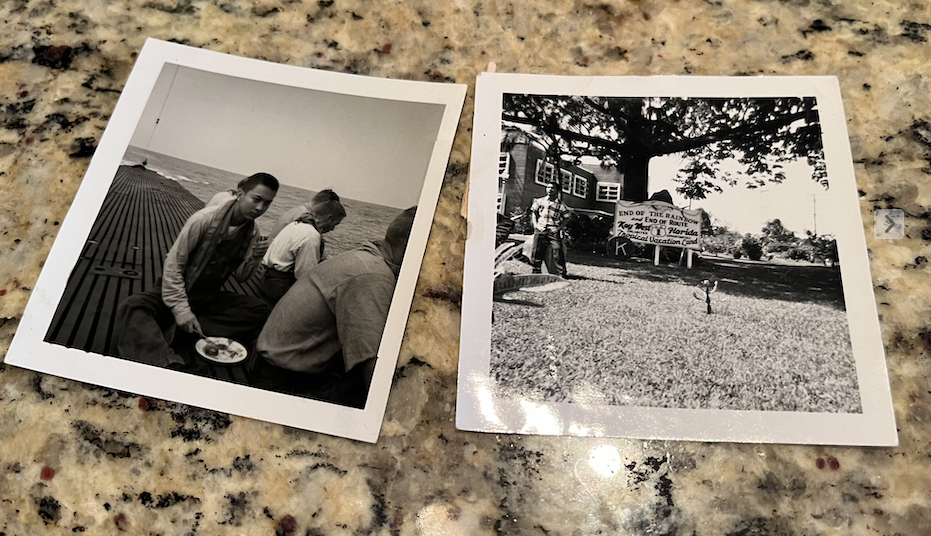
I recently watched Amazon’s remake of the 1980s movie “Roadhouse,” and it instantly brought back memories of my early submarine life. Unlike the original, the new movie is set in the Florida Keys, where I was first stationed as a young sailor. Within 4 years, I crossed paths with astronaut John Glenn, President John F. Kennedy, and the boxer Muhammad Ali.

As I wasn’t yet of drinking age, I didn’t get to share a Cuba Libre with Hemingway at his regular Key West drinking hole, the Brown Derby Saloon. The bar in Roadhouse, however, was a steel cage of sorts, home to lots of manly brawls. My steel cage at the time was a claustrophobic diesel submarine, where I was a crew member.

In the era of transition to Nuclear power, in 1958 the USS Nautilus went under the North Pole the year I joined the US Navy. Harnessing the power of nuclear reactors to produce unlimited energy, as opposed to putting wild gladiators inside a steel cage and fighting to the end. It started when the power of the wind was harvested.

I once was in a Charleston shipyard, stopping to charge the submarine’s battery. There I saw Roman Gabriel featured in an issue of Sports Illustrated, who was playing football for NC State. Following sports was a way to assimilate into American life. From there, we sailed to Europe for three months. We got to see the 1960 Olympics in Rome and watched Muhammad Ali.

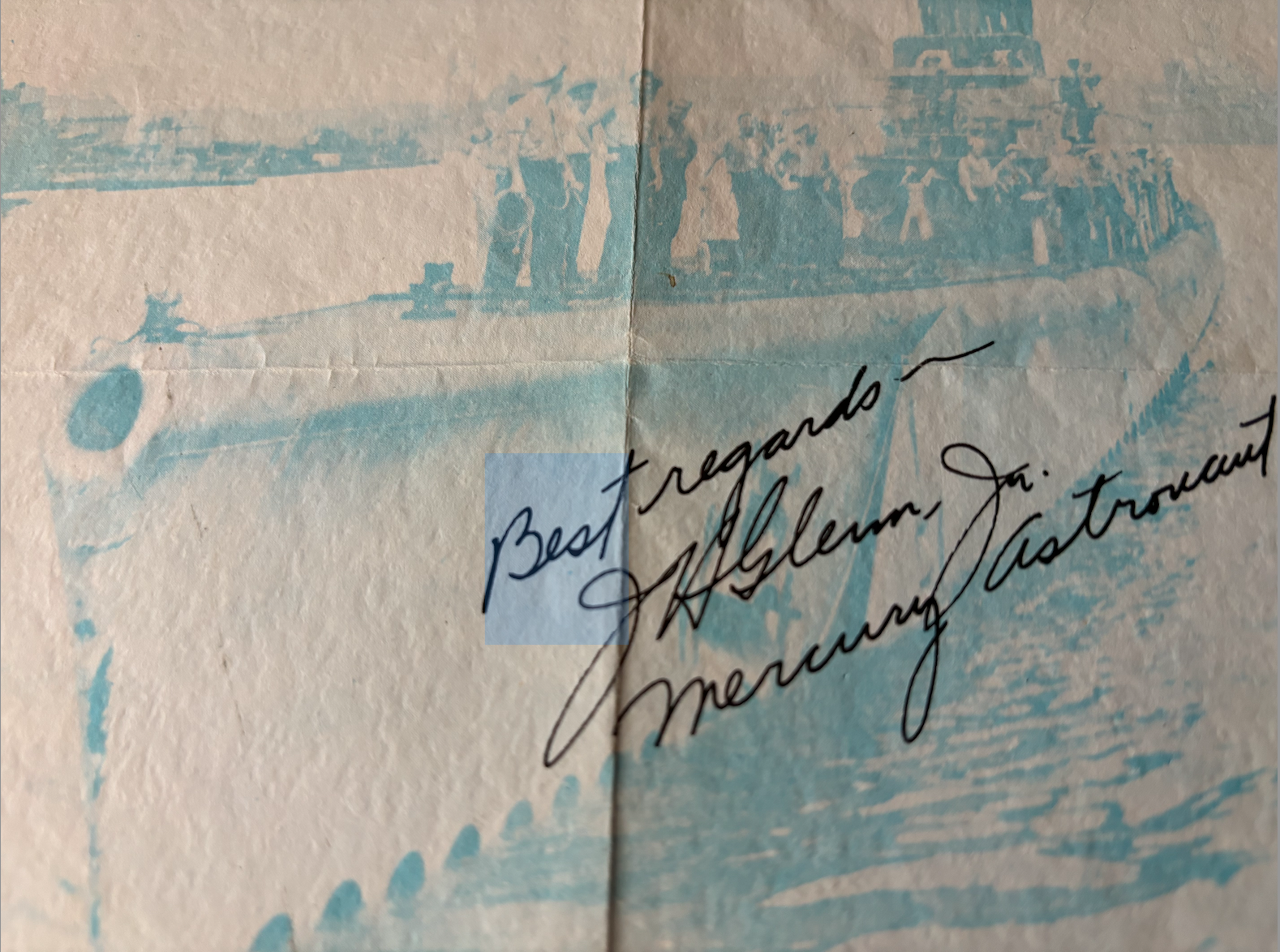
My limited Spanish translation skills helped a few asylum seekers who were pulled onboard trying to escape the crisis in Cuba. We visited Gitmo 4 times in those years. In 1961, we met up with John Glenn who was in medical isolation after a preparatory voyage for their moon landing. We also met up with JFK, in that infamous October of 1962, as Key West was the ground zero for the Cuban Missile Crisis.

My last tour was at Charleston Submarine Base, assigned to Fleet Ballistic Missile. Simply put capable of mass destruction. My lowly office and sleeping quarters were sandwiched by a nuclear reactor and 16 ballistic missiles armed with warheads. It was my version of sleeping with the devil. Our world was lucky we never fired in anger, a true deterrent of peace. The photo of me is undersea, believe it or not near Disney World. I brought my family here for the last reminiscent six years later.

The one-liner “Nobody wins in a fight” is an important lesson. The Greyhound station is a fixture in the movie as well, reminding me of my last day in the Keys, where I boarded a bus to start a journey back to the West Coast. Needless to say, I never became “Ernestor” Hemingway, my wild fantasy. I’m just the Old Man in the Sea, as Ernesto would say with humility. I was just a passenger among the crazy bunch of men. I am proud but no hero.

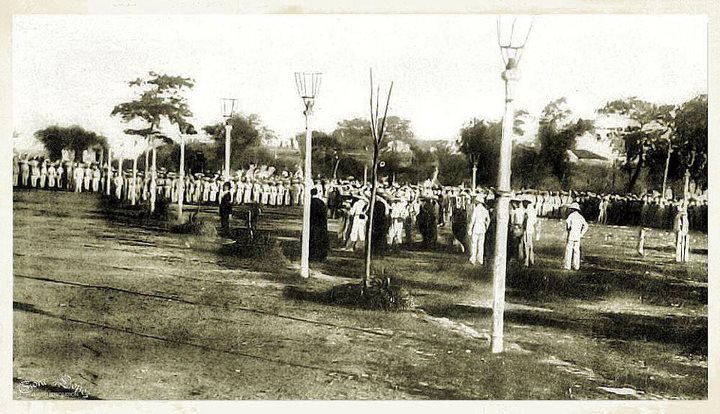
Rizal and the dog inside the execution photo 12/30/1896

dog_rizal
Focus on the sitting dog in the middle of the picture of the December 30, 1896 execution.  An eye ball account from a 20 year old witness, “Suddenly, as if from nowhere, a small dog appeared and ran in circles around Rizal’s fallen body, barking and whimpering. (This incident would much later be the subject of our talk in our quarters. To some of my comrades, it was an omen of a coming misfortune.)”
This is more than interesting trivia to me. The unleashed dog awakens the sleeping Filipino nation. barking and brewing the historical revolution in the cradle. Hilarion Martinez’s narration was published in the Sunday Times Magazine on December 25, 1949 when he was already 72 years old.
Another enhanced version:

“Then suddenly, as if if from nowhere, a small dog appeared and ran in circles around the body of Rizal, barking and whimpering. The Capitan Militar de Sanidad, or medical officer, knelt before the fallen man, and felt his pulse. Looking up, the medical officer beckoned a member of the firing squad to come forward and give the body the ‘tiro de gracia’: a shot done at close range. I thought I saw a faint haze rise from Rizal’s coat, but it might have been a wisp of morning mist. Seeing the body before me, I felt faint. I wanted to see the face of the man for the last time. Rizal lay dead on the dewy grass. The day had started and little- did I realise that I was gazing on the face of the greatest malayan of them all, that I was witnessing history in the making.”

“When I saw him. I know he was Jose Rizal. He was of regular built, unshaven and quite pale perhaps on account of his confinement, but was visibly composed and serene. Amidst the silence, Rizal began to move his head very slowly up and down, his lips moving as if in prayer. Then the commanding officer, by means of means of a saber, signalled the firing squad to aim. The saber dropped and there was a simultaneous crackle of rifle-fire. Jose Rizal wheeled in one last effort and toppled forward with a thud;his face turned toward the sky and his derby hat thrown forward. He fell facing the bay.”

What exactly immediately happened with the body of Rizal that day reminded me of José Martí (1853-1895), the Cuban patriot. Just one year earlier,May 19, 1896,  he was killed in the battle against Spanish troops at the Battle of Dos Ríos,  The Spanish took possession of the body, buried it close by, then exhumed the body upon realization of its omen. They are said not to have burned him because they were scared that the ashes would get into their throats and asphyxiate them. He is buried in Cementerio Santa Efigenia in Santiago de Cuba. Many have argued that Maceo and others had always spurned Martí for never participating in combat, which may have compelled Martí to that ill-fated suicidal two-man charge. Some of his Versos sencillos bore premonition: “No me entierren en lo oscuro/ A morir como un traidor/ Yo soy bueno y como bueno/ Moriré de cara al sol.” (“Do not bury me in darkness / to die like a traitor / I am good, and as a good man / I will die facing the sun.”) Maybe the two Masons compared notes on May 1888 when the two were in Manhattan.
Hilarion Martinez’s complete account at the age of 72 of Bagumbayan Field:

“It was six o’clock in the morning of December 30, 1896, when we woke up at our quarters at the corner of Sta. Potenciana and Magallanes Streets, in Intramuros, to attend the execution of Jose Rizal, about which we had already been briefed the day before. We were theLeales Voluntarios de Manila, a semi-military organization under the command of Capt. Manuel Leaño. Our immediate officer was a youthful Spanish lieutenant named Juan Pereira. I was twenty years old then, and a member of the drum corps.

We marched out of Intramuros through the Puerta Real, or where Nozaleda (now General Luna) Street out through the walls on the south, clad in our camamo uniforms and with our cajas vivas(or drums) strapped around our waists. We proceeded to what is now Padre Burgos Street, under an overcast sky and in a chilling December morn.

As we rounded the corner of P. Burgos and General Luna Streets, we got a glimpse of thecuadro, a square formation of about ten companies of Filipino and Spanish soldiers. The former occupied the inner portion of the quadrangle, while the latter were at the rear. This formation was strategic because the Filipino soldiers’ position with-in the cuadros ignified that the Spanish authorities wanted Rizal to die in the hands of the Filipino soldiers. If the latter disobeyed the command to fire upon Rizal, the Spanish soldiers positioned at the rear would fire upon them.

There were civilian spectators, too. The side of the cuadronear the bay was open.

As we approached the quadrangle, we saw some Spanish military officers earnestly talking in low voices. Rizal was not yet anywhere to be seen. Not having had a glimpse of the man before, I began to wonder what he looked like. I remembered what my mother had told me about Rizal: that he was so learned that he could not be poisoned by anybody because he always carried with him his own spoon and fork, by means whereof he could detect whether his food was poisoned or not; that many other legends had started to be woven around him; and that he was fighting for the cause of his country and countrymen.

Soon the small crowd heard the muffle sound of our approaching vivas(or drums) draped with black cloth during execution ceremonies. A slight commotion broke out at the right end of the cuadronear the bay as some soldiers with fixed bayonets entered, followed by a man in black suit, his elbows tied from the back, on his head achistera(or black derby hat), on one side a Spanish officer and on the other a Jesuit priest.

When I saw the man, I knew he was Rizal.

A group of Spanish officers who were standing nearby opened into amedia luna(i.e., a semicircular formation). Then a Spaniard (we would learn later he was Lt. Luis Andrade, one of Rizal’s popular Spanish defenders and sympathizers) affectionately shook the latter’s hand. When Rizal was near the center of the quadrangle, themayor de la plaza, a colonel, announced at the bandillo:‘En el nombre del Rey, el que se levante la voz a favor del reo sera ejecutado’(In the name of the King, he who raises his voice in fovor of the criminal will be executed).

A deep silence enshrouded the whole assembly.

The commanding officer accosted us and gave us this injunction: ‘Should Rizal attempt to speak aloud, beat your drums so hard as to drown his voice’.

I looked at Rizal. He was regularly built, unshaven, and quite pale, perhaps as a result of his detention. But he was visibly composed and serene. A Jesuit priest approached him, prayed, and blessed him.

Then a colonel approached Rizal likewise, as the commanding officer ordered us to move two paces backwards. The firing squad, composed of six Filipinos, came forward and took our former position behind Rizal.

I saw Rizal exert effort to raise his right hand, which was tied at the elbow, and take off his chistera.” (the darby hat)

My heart beat fast, and as in all other executions I had witnessed before, I felt tense and nervous. Amid the silence, I saw Rizal move his head very slowly up and down, his lips moving as if he was praying.

Then the commanding officer raised his saber – a signal for the firing squad to aim. Then he dropped his saber to a fuego position. The simultaneous crack of rifle-fire shattered the stillness of the morning. Jose Rizal exerted one last effort to face his executioners and toppled down with a thud, his face towards the sky and his derby hat thrown ahead. He fell dead at his feet in the direction of the bay.

Many of the reos or offenders had been caused to kneel and be hoodwinked before they were shot on the head. But Rizal was spared that humiliation.

Suddenly, as if from nowhere, a small dog appeared and ran in circles around Rizal’s fallen body, barking and whimpering. (This incident would much later be the subject of our talk in our quarters. To some of my comrades, it was an omen of a coming misfortune.)

Then the capitan militar de la sanidad (i.e., medical officer) stepped forward, knelt before the fallen man, and felt his pulse. Looking up, he beckoned to a member of the firing squad to come forward and give the final tiro de gracia (i.e., another close-range shot to the heart), probably to ensure that Rizal could not come up with the miracle of life anymore. I thought I saw a faint haze from Rizal’s coat, but it might have been a wisp of morning mist. Seeing the body of the fallen Rizal in front of me, I felt very weak.

The officers began to show animation again. They fell in formation and marched to the tune of the Spanish national air, the paso doble Marcha de Cadiz.

As in previous executions, we members of the drum corps filed past the body to view it for the last time. When I heard to command “Eyes left”, I did not shut my eyes as I had done at the sight of the several roes whose heads were blown off by rifle-fire. I really wanted to take a close look at the man one last time. He lay dead on the dewy grass. The day had already progressed, and little did I realize then that I was gazing at the face of the greatest Malayan, and that I was witnessing history of in making.”

Hilarion Martinez was, indeed, lucky to have lived in historic times. He subsequently joined the Philippine Revolution. During the Filipino-American War, he was a member of the “Batallon de Manila” under General Pantaleon Garcia and Col. Rosendo Simon. He distinguished himself in several engagements, so that he was promoted later to the rank of 2nd Lieutenant. In an assault on the American cavalry stationed in the church of Tondo, he was captured and imprisoned for about eight months in Intramuros and later in Cavite, where he was released shortly after the cessation of hostilities.